

Wet Utilities:
Water, Wastewater, Drains, & Retention
We offer cost effective solutions for civil construction in Central Texas.
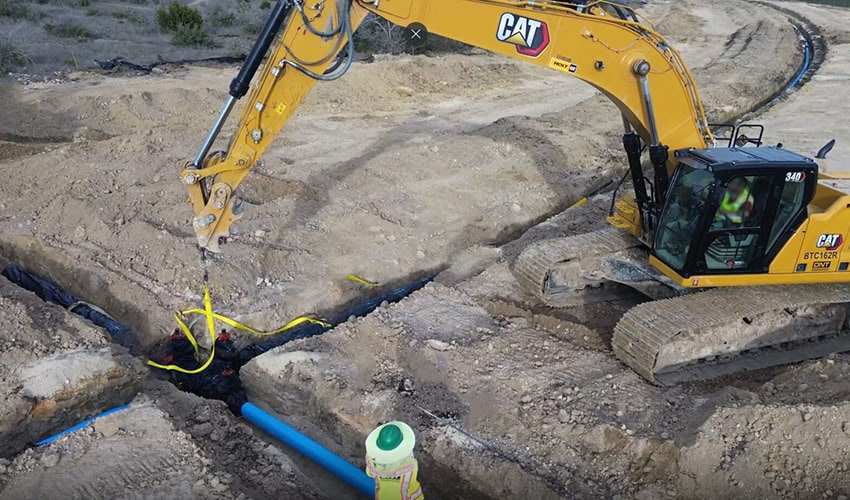
Lift Station & Pump Station Contractor — Texas
When a site cannot drain by gravity to the receiving sanitary sewer system — because of topography, distance, or a low-lying development footprint — a lift station is the solution. DNT Construction installs sanitary sewer lift stations, pump stations, and force mains for commercial, industrial, municipal, and data center projects across Texas, as part of an integrated civil scope that typically includes the gravity sewer system, water distribution, and stormwater drainage handled by the same crews under one contract.
DNT's wet utility crews are experienced with both precast concrete wet-well lift stations and fiberglass packaged lift stations, and coordinate directly with the accepting utility authority — City of Austin Water, San Antonio Water System (SAWS), City of Houston Public Works, or the applicable MUD district engineer — through the permitting, inspection, wet-well testing, and final acceptance process.
LiftStation Scope — What DNT Self-Performs
- Precast concrete wet-well lift stations — excavation, dewatering, wet-well setting, pump installation, valve vault, and electrical and controls conduit rough-in
- Fiberglass packaged lift stations — excavation, bedding, station installation, wet-well connections, valve vault, and conduit rough-in; coordination with the pump package supplier for startup and commissioning
- Force main installation — HDPE and PVC pressure pipe installation from the pump discharge to the receiving gravity manhole or utility connection point, including fittings, air-release valves, and isolation valves
- Gravity sewer approach lines — the gravity sewer network leading to the wet well, installed concurrently with the lift station scope
- Electrical and controls conduit — raceway from the wet well to the control panel pad; electrical contractor installs the panel and wiring under a separate scope
- Site grading and restoration — excavation, backfill, compaction, and surface restoration around the station footprint
When Is a Lift Station Required?
A lift station is required when the lowest sanitary sewer collection point on a site cannot achieve positive gravity flow to the nearest receiving manhole or gravity trunk main at the minimum slope specified by the engineer of record. Common conditions that require a lift station in Texas include:
- Flat Houston-area and Gulf Coast sites where available fall from building to street sewer is minimal
- Sites that drain away from the nearest gravity system, requiring force main transmission across a watershed divide
- Phased developments where the permanent gravity extension will not be built until a later phase
- Data center campus sites with remote generator yard or utility corridor buildings positioned well below the main campus elevation
- Commercial developments in areas where the municipality or MUD requires private on-site lift stations to limit tributary flow to the public gravity system
Coordination with Texas Utility Authorities
Lift station plan approval, inspection, and acceptance by the responsible utility authority is one of the more time-intensive elements of a wet utility scope. DNT Construction's project teams are experienced with the specific submittal, inspection, and acceptance requirements of the major Texas utility authorities:
- City of Austin Water Utility — lift station standards, wet-well testing protocol, and meter set coordination
- San Antonio Water System (SAWS) — pump station specifications, force main pressure testing, and acceptance requirements
- City of Houston Public Works — Harris County Flood Control coordination where force mains cross drainage infrastructure
- Municipal Utility Districts (MUDs) — MUD engineer review, board approval, and district acceptance process across Williamson, Hays, Fort Bend, and Montgomery counties
DNT initiates utility authority coordination in preconstruction — well before the station is ready to install — so that plan approvals, material submittals, and inspection scheduling don't sit on the critical path when the pump station is in the ground and waiting on sign-off.
Related Services
- Wet Utility Installation — Complete underground wet utility scope: gravity sewer, water mains, storm drainage, and retention ponds installed concurrently with lift station work.
- Dry Utility Installation — Electrical conduit, telecom, and fiber installed alongside wet utilities to compress the underground phase.
- Mass Grading & Earthwork — Site grading and earthwork that establishes the finished grades lift station elevations are designed to serve.
- Data Center Civil Sitework — Lift station and force main installation as part of DNT's turnkey data center civil scope.
Frequently Asked Questions
What lift station sizes does DNT install?
DNT Construction installs lift stations ranging from small commercial wet wells (200–500 GPM) to large municipal and industrial pump stations handling several thousand GPM. Pump sizing and wet-well volume are determined by the civil engineer of record based on the tributary basin's projected flow, peak factor, and minimum detention time requirements. DNT works from the engineer's specified station size and pump selection and coordinates with the supplier on lead time, delivery, and startup support.
Does DNT install the electrical and controls components of a lift station?
DNT self-performs the civil scope — excavation, wet-well installation, force main, valve vault, and conduit rough-in. The electrical panel, pump control system, SCADA integration, and generator connection are typically scoped to a licensed electrical contractor. On most projects, DNT's civil scope and the electrical contractor's scope run concurrently, and DNT coordinates the conduit rough-in to match the panel location and wire-routing requirements agreed in preconstruction.
How long does lift station installation take?
A typical single commercial lift station — excavation through wet-well setting, force main installation, and backfill — takes 2 to 4 weeks. Larger pump stations with multiple wet wells, complex valve vaults, or difficult dewatering conditions take longer. Acceptance by the utility authority typically adds 2 to 6 weeks depending on the authority's inspection scheduling and testing protocol. DNT initiates the submittal process well before installation is complete to minimize the gap between physical completion and formal acceptance.
Can DNT perform emergency lift station repairs?
DNT Construction's primary business is new construction civil work. For active project sites where a lift station or force main requires emergency attention during construction, DNT's crews can respond as part of the ongoing project scope. For emergency repair of existing infrastructure unrelated to a DNT project, contact the responsible utility authority or a specialty pump service contractor.
Does DNT provide lift station work as a standalone scope or only as part of a larger civil package?
Both. DNT can price lift station and force main installation as part of a full civil sitework package (grading + utilities + paving) or as a standalone wet utility scope on projects where the grading work is already complete or held by another contractor. Contact DNT at (512) 837-6700 to discuss scope and schedule for your specific project.
AUSTIN
301 FM 972
Georgetown, TX 78626
Phone: 512-837-6700
Fax: 512-837-6701
Email: inquiries@dntconstruction.com
Bids: bidsaus@dntconstruction.com
SAN ANTONIO
18954 Redland Road
San Antonio, TX 78259
Phone: 210-490-6700
Fax: 210-490-6701
Email: inquiries@dntconstruction.com
Bids: bidssa@dntconstruction.com
HOUSTON
220 Bella Katy Dr, Suite 1
Katy, TX 77494
Phone: 346-615-0880
Fax: 346-615-0881
Email: inquiries@dntconstruction.com
Bids: bidshou@dntconstruction.com